
The Spatial Dynamics of Dining Chairs vs Dining Benches
When curating a contemporary dining room, the seating layout dictates not only how the space looks, but how people gather, interact, and move. The architectural debate of dining chairs vs dining benches centers on a fundamental design choice: the structured individual comfort of traditional chairs versus the communal warmth and open sightlines of a modern bench. In modern residential planning, interior designers frequently move away from uniform showroom sets, drawing inspiration from design publications like mixing eclectic dining seating on Houzz to craft dynamic, lived-in entertaining spaces.
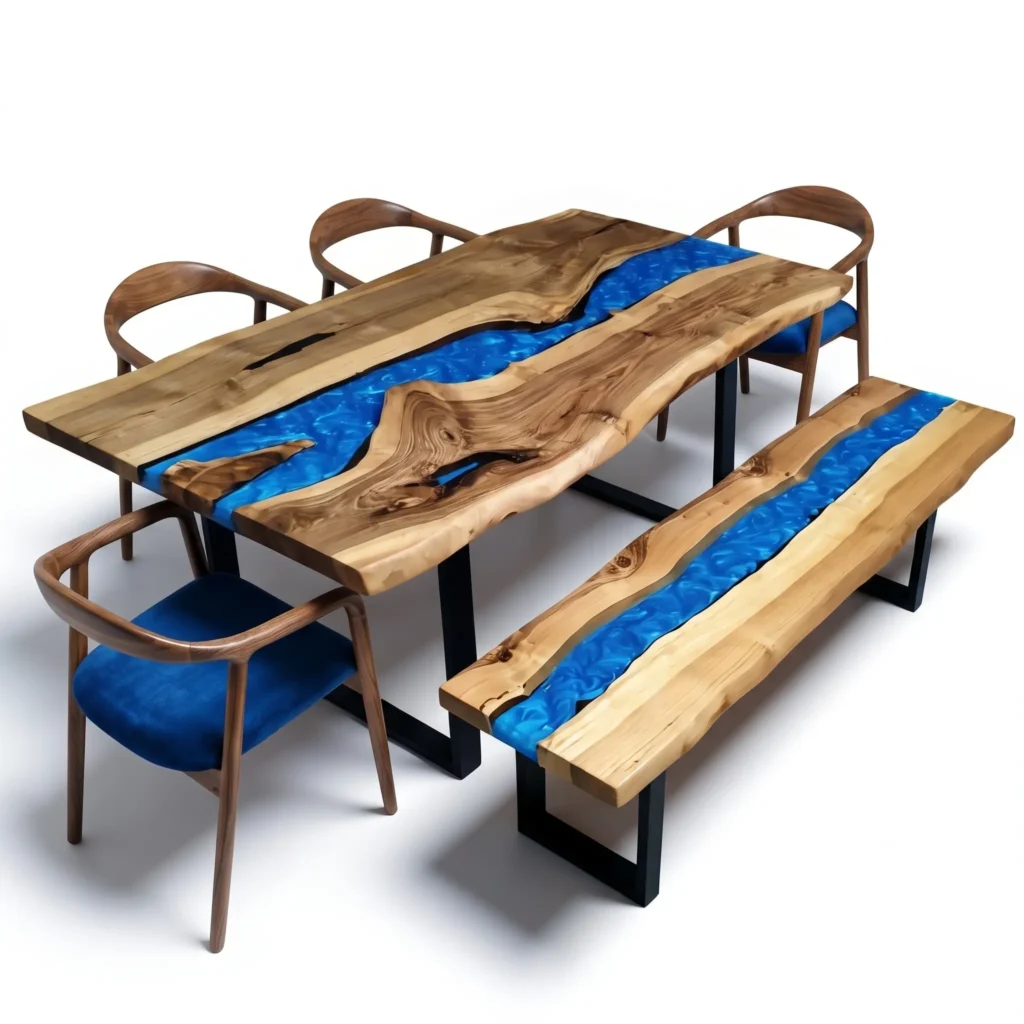
Understanding the balance in dining chairs vs dining benches requires examining how each seating format interacts with your dining surface. An expansive solid wood dining tables centerpiece commands a distinct spatial presence. Flanking both long edges with identical high-backed chairs can occasionally create visual clutter, especially in open-concept floor plans where the dining area directly overlooks the living room or kitchen island. Introducing a bench immediately lightens the room’s profile by lowering vertical sightlines.
Evaluating the Strengths: Dining Chairs vs Dining Benches
To determine the ideal seating configuration for your dining room, weighing the practical merits of dining chairs vs dining benches is essential:
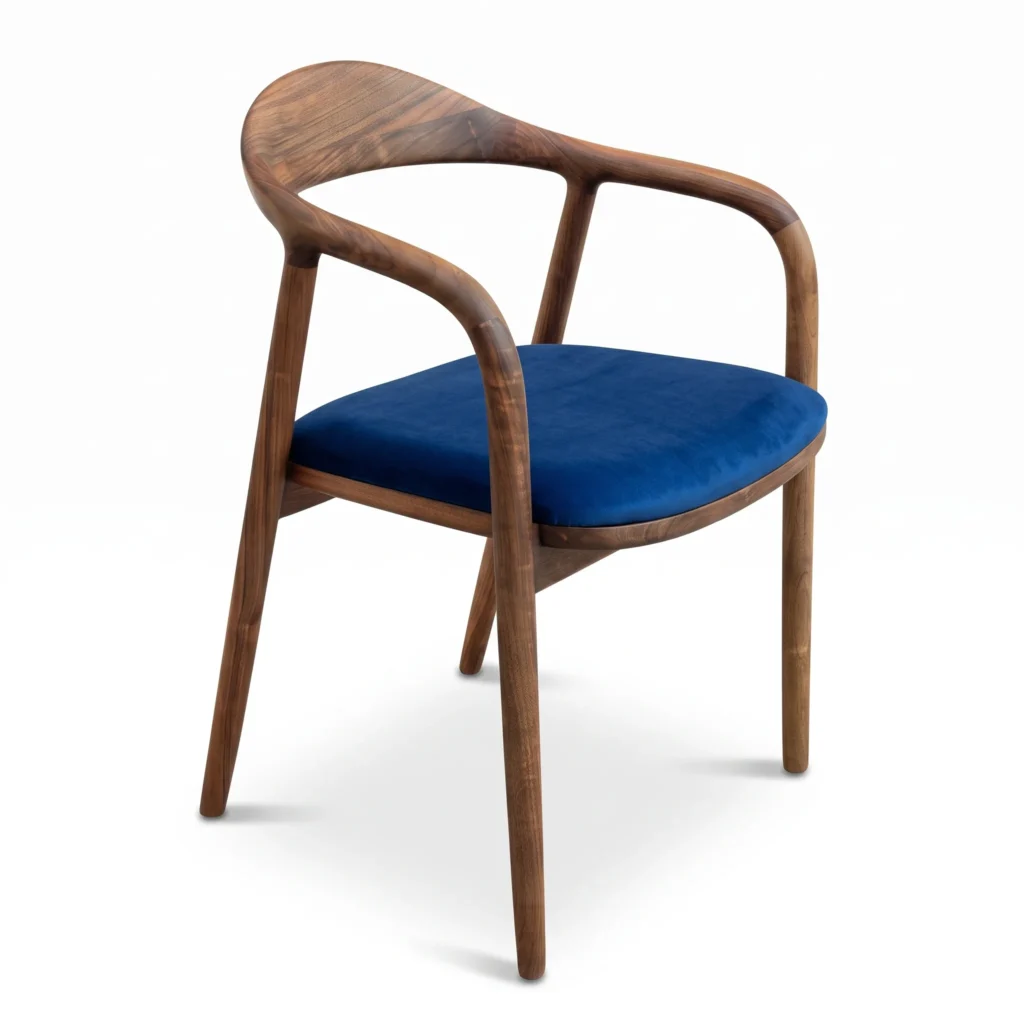
- Individual Ergonomics & Lumbar Support: Dining chairs excel in prolonged, formal dinner settings. Our handcrafted Heritage walnut dining chairs feature precision-sculpted lumbar curves that support natural spinal alignment, making them indispensable for hosting multi-course dinner parties where guests linger for hours.
- Customizable Upholstery Expression: With chairs, homeowners can introduce sophisticated textures like tactile bouclé, natural woven linen, stain-resistant velvet, or durable premium faux leather. This introduces warmth and tactile richness that softens the strong architectural presence of solid timber.
- Spatial Efficiency & Low Sightlines: In the comparison of dining chairs vs dining benches, benches provide an unmatched sense of architectural openness. A streamlined handcrafted walnut bench with metal legs tucks neatly beneath the table perimeter when not in use, instantly reclaiming valuable circulation space in narrower dining rooms.
- Communal Flexibility: While a single chair accommodates exactly one person, a dining bench offers flexible capacity. An 84-inch bench effortlessly seats three adults or four children during celebratory holiday dinners, fostering a relaxed, welcoming atmosphere.
Architectural Comparison: Dining Chairs vs Dining Benches
To assist in evaluating dining chairs vs dining benches for your specific dining room layout, review the comparative technical overview below:
| Architectural Factor | Solid Walnut Dining Chairs | Live Edge & Solid Benches | The Hybrid Mix & Match Model |
|---|---|---|---|
| Visual Weight | Vertical cadence with rhythmic repetition | Low, horizontal profile with open sightlines | Balanced, intentional asymmetry |
| Seating Flexibility | Fixed capacity (1 diner per chair) | Fluid capacity (2–5 diners per bench) | Maximized utility for guests and family |
| Walkway Clearance | Requires 36″–42″ clearance from walls | Can tuck fully beneath the tabletop edge | Reclaims walkway on one complete side |
| Optimal Interior Style | Formal, Executive, Classic Modern | Casual Minimalist, Rustic Modern | Contemporary Loft, Transitional Luxury |
How to Mix and Match: Rules for Contemporary Balance
Rather than treating dining chairs vs dining benches as an either-or decision, contemporary interior design thrives on blending both elements into a harmonious hybrid arrangement. Combining a bench with individual chairs delivers the best of both worlds: ergonomic back support on one side and casual spatial freedom on the other.
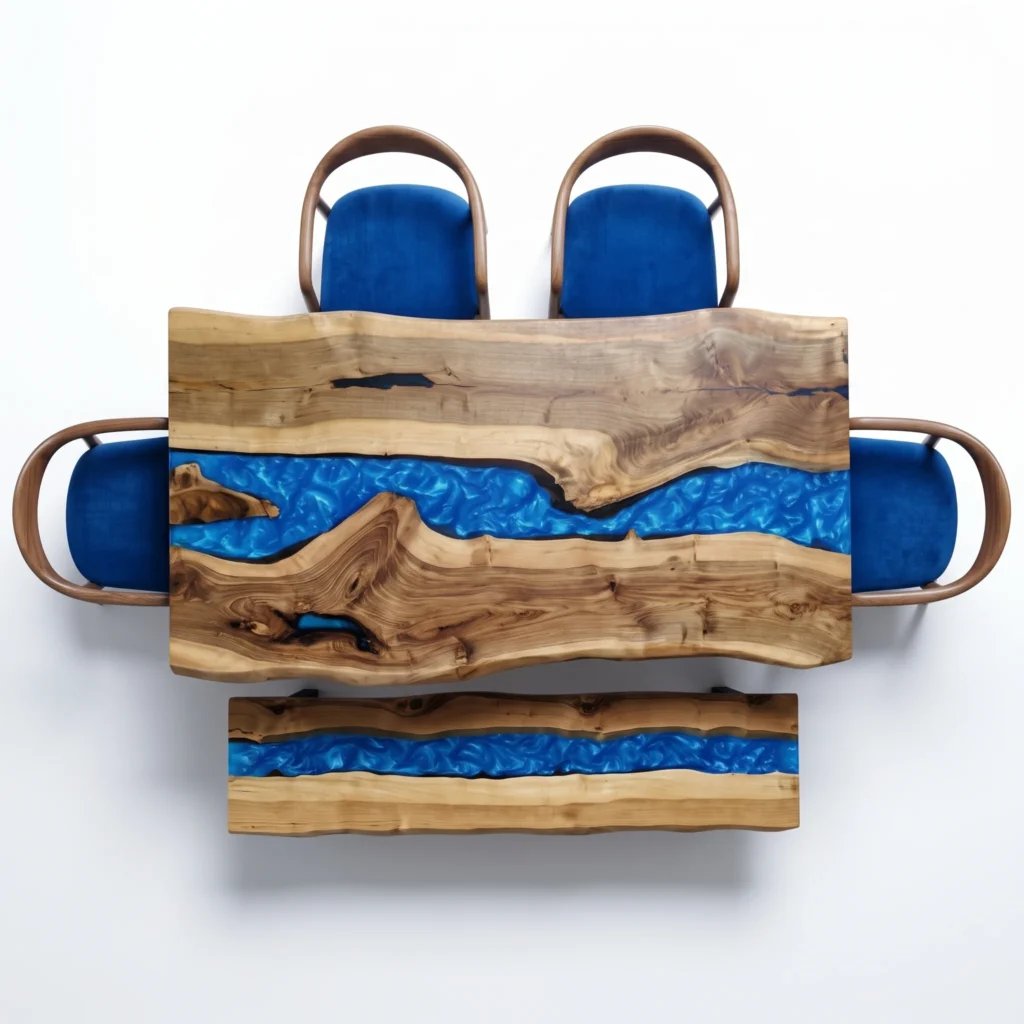
To execute this hybrid layout successfully, anchor your dining space with unified wood tones. For instance, our integrated solid wood dining table with bench demonstrates how pairing matching European walnut timber creates an intentional foundation. You can position the bench along the wall-facing side to preserve open walkways, while placing individual chairs on the outward-facing side where their sculpted backrests create an inviting visual frame.
This layout also performs exceptionally well with polymer river centerpieces. When styling a statement navy blue epoxy dining table with chairs suite, replacing the chairs on one side with a matching solid wood bench highlights the glass-smooth resin river by preventing high-backed chairs from obscuring the central art feature.
Sizing, Proportions, and Clearance Rules
When implementing a hybrid solution in the debate of dining chairs vs dining benches, spatial math is essential to prevent awkward clearances and knocked knees:
- The Inset Bench Clearance Rule: If you want your dining bench to slide fully between the table legs when not in use, the bench length must be 2 to 4 inches shorter than the interior distance between the table legs. For a 96-inch table, an 80-inch bench allows smooth, effortless tuck-away storage. We can customize the bench length and leg placement according to your preferences during the production process, and we can provide guidance along the way.
- The Full-Length Flush Rule: If your table features an architectural pedestal or spider base rather than corner post legs, you can match the bench length directly to the tabletop length up to our express freight maximum of 110 inches (280 cm).
- Table and Seating Height Alignment: Ensure seating heights align within industry standards. Both our solid walnut chairs and benches are engineered to an optimal 18.5-inch (47 cm) seating height, designed to pair with tables measuring 29 to 31 inches high.
- Perimeter Circulation: Maintain at least 36 inches of clear walkway behind chair rows. The bench side requires significantly less clearance when pushed against a banquette wall or positioned along a high-traffic hallway.
For large-scale dining spaces, pairing a live edge slab like our natural walnut live edge dining table with an organic live edge bench creates breathtaking natural harmony. Read our architectural exploration on why live edge furniture is unique to see how undulating slab perimeters elevate dining spaces.
Atelier Craftsmanship: Hardwood Longevity and Finishes
Whether you choose individual seating, a bench, or a hybrid layout in dining chairs vs dining benches, material durability depends entirely on how the timber is seasoned and protected. WOWbyALP operates dedicated production studios in Ankara, Turkey, with Wow by Alp LLC managing commercial operations and logistics in the United States.
- Kiln Stabilization (8%–12% Moisture): Every European walnut slab used for tables, benches, and chair frames is slowly conditioned in computer-monitored kilns. Achieving an 8%–12% moisture equilibrium prevents timber checking, seasonal warping, and joint separation in climate-controlled residences.
- Dedicated Finishing Standards: We apply purpose-engineered finishes based on furniture usage. Solid wood table tops and dining benches are hand-buffed with 0% VOC food-safe natural hardwax oils that preserve natural grain tactility. In contrast, our walnut chair frames are treated with a specialized, furniture-grade protective matte finish that withstands handling, friction, and daily movement.
- Organic Polymer Integration: For spaces that combine wood and liquid art, explore our gallery of epoxy dining tables to examine how polymer channels withstand daily dining use alongside solid wood seating.
To learn more about our multi-slab joinery, timber grading, and finishing protocols, review our comprehensive feature on the art of handcrafted walnut furniture.
Commissioning Your Custom Seating Layout
Every home presents distinct architectural parameters, from narrow urban loft spaces to expansive open-plan suburban dining rooms. In resolving the question of dining chairs vs dining benches for your interior, bespoke manufacturing guarantees a flawless fit:
- Tailored Bench Lengths: Commission custom bench lengths scaled precisely to your table’s leg span, from compact 48-inch hallway benches to grand 110-inch dining benches.
- Flexible Chair Quantities: Order individual accent chairs, pairs, or complete sets of 4, 6, 8, or 10 chairs to complete your hybrid layout.
- Coordinated Upholstery & Timber Matching: Ensure chair seat fabrics complement your dining palette while chair frames are milled from the exact same kiln-dried walnut lot as your table and bench.
If you are planning a dining room redesign and need guidance on spatial clearances or 3D layout renderings, connect directly with our master craftsmen through our contact us for custom orders page.
Frequently Asked Questions: Dining Chairs vs Dining Benches
Which option is better for small dining spaces: dining chairs vs dining benches?
In the debate of dining chairs vs dining benches for compact or narrow rooms, dining benches generally provide superior spatial efficiency. A bench can be tucked completely beneath the table when not in use, clearing walkways and keeping sightlines open, whereas chairs require continuous floor clearance.
Can I comfortably mix dining chairs and dining benches at the same table?
Yes, absolutely. The hybrid approach—positioning a dining bench along one side of the table and individual dining chairs along the other—is one of the most popular and functional arrangements in contemporary interior design. It delivers ergonomic back support for diners who prefer it while creating a relaxed, welcoming environment.
How long should a dining bench be relative to the dining table?
If you plan to tuck the bench between the table legs, the bench should be 2 to 4 inches shorter than the distance between the inside of the table legs. If the table features a pedestal or central base, the bench can match the full length of the tabletop up to 110 inches (280 cm).
Are dining benches comfortable for long dinner parties compared to chairs?
Dining chairs with ergonomic backrests and padded cushions, such as our Heritage solid walnut chairs, offer superior lumbar support for multi-course dinners lasting several hours. Benches are ideal for family meals and casual entertaining, though adding custom upholstered bench pads can significantly enhance long-session comfort.
