
The Finishing Dilemma: Natural Hardwax Oil vs Polyurethane
In high-end furniture design and architectural woodworking, selecting a surface treatment is just as decisive as selecting the raw lumber itself. The debate between natural hardwax oil vs polyurethane represents two entirely distinct engineering philosophies: penetrating cellular nourishment that preserves the organic breathability of hardwood versus an impermeable film-forming plastic membrane designed to create an impenetrable barrier. When deciding between natural hardwax oil vs polyurethane, understanding how wood and finishes interact at a physical and structural level is vital before investing in heirloom-grade furniture.
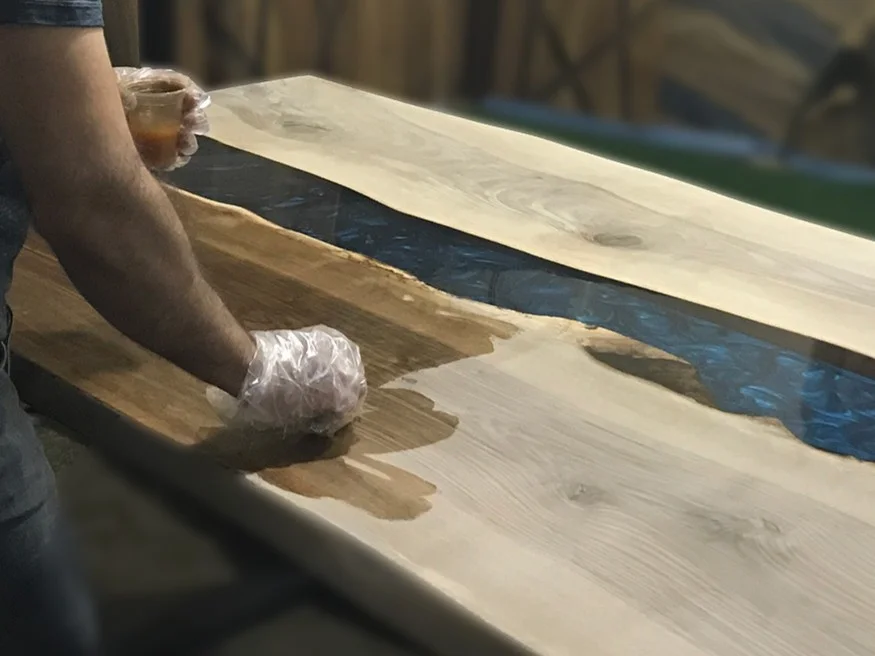
When examining natural hardwax oil vs polyurethane, polyurethane varnishes unquestionably provide formidable defense against standing water, chemical cleaners, and abrasive physical contact. For gymnasiums, commercial bar countertops, and heavy-traffic bowling alleys, that impenetrable plastic film is indispensable. However, when applied to centuries-old European walnut or Anatolian olive wood, thick plastic topcoats encase the timber in a glassy synthetic capsule, severing the tactile connection between the human hand and the wood’s organic texture.
Film-Forming Plastic vs. Penetrating Cellular Protection
To evaluate natural hardwax oil vs polyurethane objectively, one must look at how each formulation cures and bonds with hardwood cellular pores:
- Polyurethane Varnish (Film-Forming): Polyurethane is a synthetic polymer resin that cures through chemical cross-linking. Rather than penetrating deep into the wood grain, it sits atop the surface like a sheet of clear laminate. While this creates a tough plastic shield that stops liquids from touching raw timber, it suffocates the wood pores. Under seasonal shifts in interior humidity, solid timber continues to expand and contract microscopically, which can eventually cause rigid polyurethane films to crack, craze, or turn milky white.
- Natural Hardwax Oil (Penetrating & Wax Bond): Formulated from purified plant oils (such as linseed, thistle, and sunflower) combined with carnauba and beeswax, hardwax oil operates on a dual-action mechanism. The low-viscosity plant oils penetrate deep into the cellular lumen of the wood, nourishing the fibers from within. Simultaneously, the microscopic hard waxes crystallize at the surface pores, creating a water-repellent, breathable microporous layer that moves harmoniously with the solid wood.
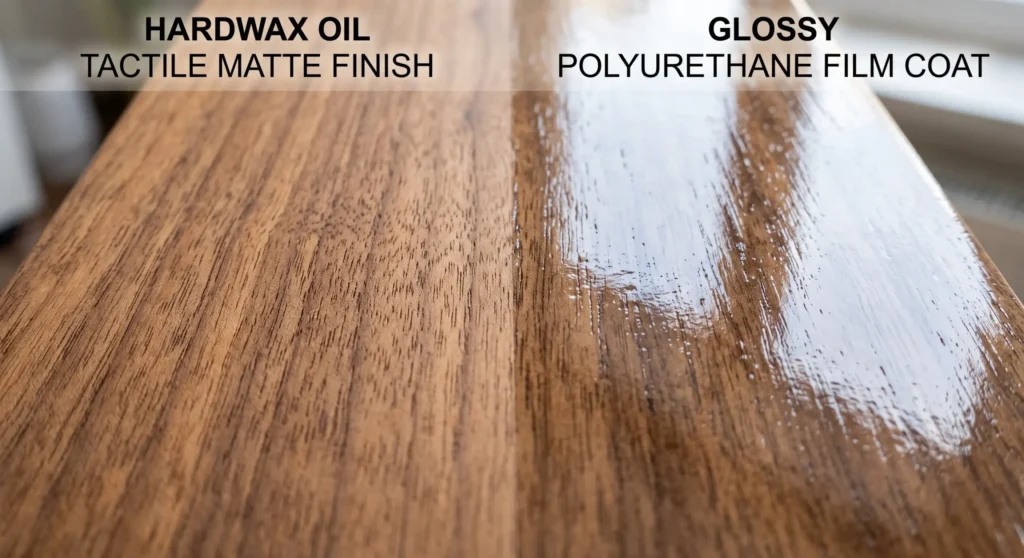
In the debate of natural hardwax oil vs polyurethane, breathability is paramount. Because timber breathes and responds to ambient air, utilizing a penetrating oil finish prevents internal moisture entrapment. For an in-depth analysis of timber moisture equilibrium (8%–12%) and multi-slab joinery, explore our architectural feature on the art of handcrafted walnut furniture.
Comparative Analysis: Natural Hardwax Oil vs Polyurethane Performance
To help discerning collectors, architects, and interior designers weigh the practical trade-offs of natural hardwax oil vs polyurethane, review the comparative technical overview below:
| Performance Criterion | Natural Hardwax Oil Finish | Polyurethane Varnish |
|---|---|---|
| Surface Tactility & Feel | Warm, natural wood texture; 100% tactile grain | Cold, synthetic plastic feel; smoothed over |
| Visual Luster & Light Refraction | Rich organic matte/satin; accentuates 3D grain chatoyancy | High-gloss or artificial sheen; prone to light glare |
| Liquid & Spill Resistance | High; beads water, wine, and coffee with timely wipe-up | Extreme; impervious barrier against standing liquids |
| Scratch & Wear Repairability | Effortless localized spot repair without sanding the whole piece | Cannot be spot-repaired; requires stripping and recoating entirely |
| Indoor Air Quality | 0% VOC formulations; food-safe and odor-free once cured | Off-gasses solvents and chemical odors during extended curing |
| Aging & Patina Development | Ages gracefully; timber deepens into a magnificent vintage patina | Prone to ambering, yellowing, chipping, or flaking over decades |
The Spot-Repair Advantage: Heirloom Maintenance vs. Complete Stripping
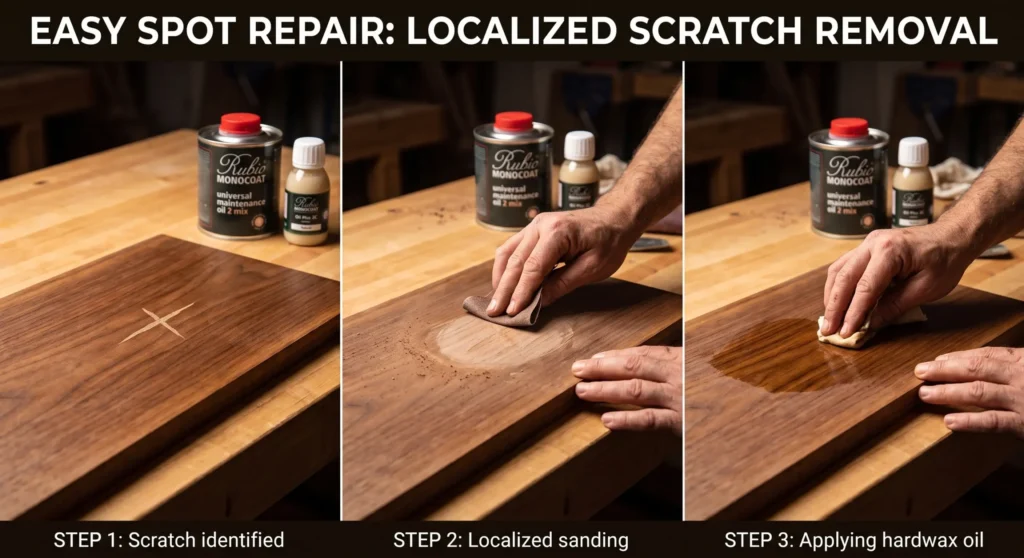
Perhaps the most significant functional distinction in natural hardwax oil vs polyurethane emerges when daily accidents inevitably occur. In a bustling dining room, a dropped heavy ceramic bowl, an accidental fork scrape, or a pet’s claw will leave a mark on any surface over a ten-year timeline.
When polyurethane is scratched, the clear plastic skin is physically punctured. Ambient moisture can seep beneath the breach, causing the surrounding plastic coat to lift and turn cloudy white. Because fresh polyurethane cannot blend seamlessly into cured polyurethane without showing lap lines, repairing a localized 2-inch scratch requires hiring professional refinishers to chemically strip the entire tabletop, sand down the wood, and reapply multiple coats across several days.
In stark contrast, natural hardwax oil vs polyurethane offers complete spot-repair independence. If a hardwax-oiled surface suffers a scuff, you simply buff the affected zone with fine abrasive fleece or 320-grit sandpaper, dab a few drops of natural maintenance oil onto a cotton cloth, and blend it into the grain. Within minutes, the fresh oil cross-links with the existing wax matrix, making the scratch vanish with zero visible borders. This allows centerpieces in our solid wood dining table collection to retain flawless beauty over generations without disruptive overhauls.
Why We Never Plastic-Coat Real Wood: The WOWbyALP Workshop Principle
A frequent question from luxury furniture buyers relates to polymer resin tables. In cheap commercial manufacturing, workshops often pour a high-gloss synthetic epoxy “flood coat” over the entire wooden slab to achieve instant gloss with minimal labor. At WOWbyALP, our Ankara atelier explicitly rejects this practice.
When crafting a bespoke navy blue epoxy dining table with chairs suite, liquid resin is utilized strictly within lateral river channels and structural voids. Once the polymer cured and hand-polished through sequential 3M micro-abrasive grits, our artisans hand-buff the surrounding European walnut slabs exclusively with 0% VOC food-safe natural hardwax oils. This engineering decision guarantees that while diners enjoy the jewel-like refractive depth of the central river, their forearms rest upon breathable, silky solid timber rather than cold resin plastic. To understand our resin formulation standards, read our guide on what is epoxy furniture.
The practical conclusions drawn from natural hardwax oil vs polyurethane reinforce this standard across our entire epoxy dining table collection and organic single-slab centerpieces like the natural walnut live edge dining table. Preserving raw timber tactility honors the tree’s natural origin, a concept we explore in detail in why live edge furniture is unique.
Balancing Finishes Across Living Spaces: Tables vs. Seating
In comparing natural hardwax oil vs polyurethane across an entire furniture suite, functional context always guides master woodworking. While natural hardwax oil is our uncompromising standard for wide architectural tabletops and our matching handcrafted walnut bench with metal legs, functional context always guides master woodworking. For high-friction furniture components—such as the frame and slender legs of our Heritage walnut dining chairs—our artisans utilize a specialized, furniture-grade protective matte finish. This provides structural scratch defense against shoe scuffs and constant room movement without the glossy artificial look of common polyurethane.
By tailoring finish formulas to how each piece is physically used, our Ankara atelier achieves the ideal balance: pure tactile warmth for dining and work surfaces where hands and food interact, and enhanced friction defense for architectural seating frames.
Daily Care and Refreshment: Living with Natural Hardwax Oil
When weighing natural hardwax oil vs polyurethane for long-term daily ownership, living with natural hardwax oil is remarkably simple and requires no specialized chemical regimen. Observing these basic care practices will preserve your solid timber for a lifetime:
- Daily Cleaning: Simply wipe the wood surface with a soft microfiber cloth lightly dampened with lukewarm water. For routine meal cleanup, use a mild, pH-neutral soap solution. Avoid ammoniated window sprays, bleach, or acidic multi-surface degreasers, which can degrade the protective wax layer over time.
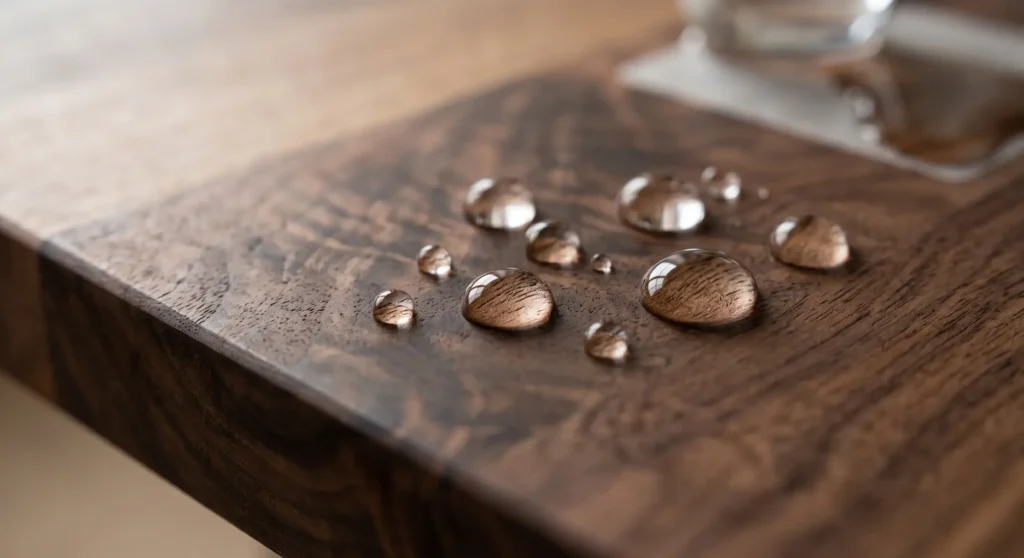
- Immediate Spill Protocol: Because the carnauba wax layer provides hydrophobic resistance, liquids like water, red wine, balsamic vinegar, and olive oil will bead up on the surface. Simply blot spills dry within reasonable time frames to prevent extended standing contact.
- Rejuvenation (Every 12–18 Months): Unlike polyurethane which slowly deteriorates until complete replacement is required, a hardwax oil surface can be rejuvenated indefinitely. Applying a thin coat of clear maintenance oil every year or two replenishes the wax barrier, restoring rich color depth and silky luster in under twenty minutes.
Commissioning Bespoke Handcrafted Furniture with WOWbyALP
WOWbyALP operates as an authentic direct manufacturer with dedicated lumber preparation, multi-slab joinery, and artisanal finishing workshops in Ankara, Turkey. Meanwhile, Wow by Alp LLC (US) coordinates global logistics, secure commercial transactions, and direct customer care in North America. By eliminating retail middlemen, we guarantee total craftsmanship accountability from raw timber selection to your doorstep.
Whether you have questions regarding natural hardwax oil vs polyurethane or require a custom dining table scaled up to our international express air cargo limit of 110 inches (280 cm), custom resin pigment matching, or personalized chair upholstery, submit your design specifications via our contact us for custom orders page to consult directly with our master woodworkers.
Frequently Asked Questions: Natural Hardwax Oil vs Polyurethane
Is natural hardwax oil water-resistant enough for a daily dining table?
Yes, absolutely. High-performance natural hardwax oil vs polyurethane creates a hydrophobic wax barrier that actively repels liquids. Common household spills—including coffee, red wine, fruit juice, and water—will bead up on the surface and can be wiped clean with a damp microfiber cloth without staining, provided they are not left standing indefinitely.
Why does polyurethane feel cold and artificial compared to hardwax oil?
Polyurethane creates a continuous synthetic plastic film over the timber, preventing your hands from directly touching the natural wood pores. In contrast, natural hardwax oil vs polyurethane penetrates into the wood cellular structure and bonds at the surface, allowing you to feel the organic grain texture and warm thermal conductivity of genuine hardwood.
Can I apply natural hardwax oil over an existing polyurethane finish?
No. Because natural hardwax oil must penetrate into the open cellular pores of the hardwood to cure properly, it cannot be applied over a film-forming finish. Any existing polyurethane, varnish, or lacquer must be completely sanded away down to bare timber before applying hardwax oil.
How often does a solid wood table with natural hardwax oil need maintenance?
For standard residential dining use, a quick wipe-on application of liquid maintenance wax every 12 to 18 months is all that is required to restore water repellency and enrich the wood grain. The process takes less than 15 minutes and requires no professional tools or sanding.
